

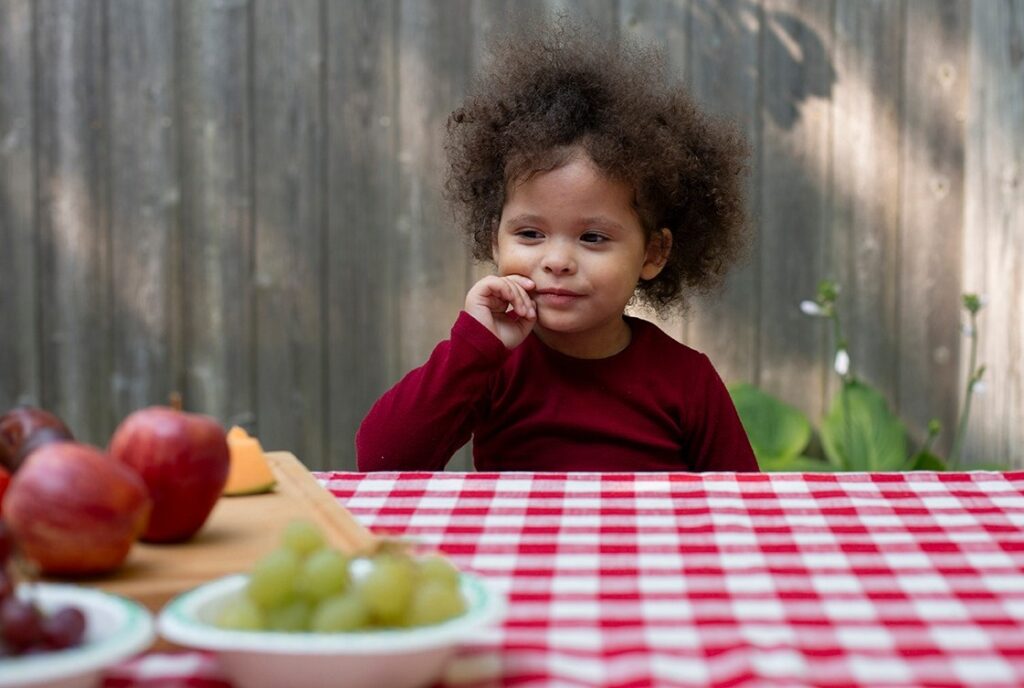

Mealtimes are more than just nutrition, they’re a chance for little ones to explore, learn, and grow. Young children can be curious eaters, discovering new flavors and textures every day. But as they figure out how to chew and swallow, some foods can be tricky for them to handle safely.
The good news? There’s no need to skip family favorites or cook separate meals. You can make mealtime safer, more fun, and confidence-building for your little eater.
Start with Good Eating Habits
How kids eat is just as important as what they eat. Since kids under four years old are still learning to chew and swallow, encouraging healthy habits at mealtimes helps prevent choking and builds good eating habits for life.
- Have kids sit upright while eating and focus on their food instead of eating while running, playing, or lying down.
- Encourage small bites, slow chewing, and swallowing before talking.
- Keep a calm, distraction-free eating space.
Prep Makes Perfect
Just a little food prep can help make meals safer and cut down the chance of choking. All food should be cut into small pieces no larger than ½ inch. When in doubt, avoid round shapes and think small, soft, and easy to chew.
- Cook or steam firm foods (like apples, carrots, or broccoli) until they’re soft enough to mash with a fork.
- Slice tube-shaped foods like string cheese and hot dogs into short strips instead of circles.
- To avoid round shapes, cut foods like grapes and cherry tomatoes lengthwise (the long way) first and then dice into smaller pieces. Slice blueberries and other small berries in half.
- Offer ground, finely chopped, or shredded meat instead of large pieces.
- Choose crispy snack foods that dissolve easily, like soft crackers, puffs, or small pieces of bread.
- Blend fruits into smoothies, stir mashed fruits into yogurt or use them as simple desserts.
Foods to Avoid (for Now)
Some foods are best saved for when kids are older and more confident eaters. Skip these for now, since they can’t easily be made safer:
- Nuts and Seeds– Small, hard pieces can be difficult to chew and may cause choking.
- Dried Fruits-Sticky, chewy foods can get stuck in the mouth.
- Whole Kernel Corn– Corn kernels are round and firm, making them easy to accidentally swallow whole.
- Crunchy Snack Foods– Crunchy or “airy” snacks like chips, popcorn, and pretzels can break into sharp or hard to manage pieces.
- Hard, Gooey, or Sticky Candy– These candies can be hard to chew and difficult to clear from the mouth.

As kids grow and their chewing skills improve, these foods can gradually be added in. For now, soft, small, and easy-to-chew options are the safest bet.
Looking for a few recipes all ages can enjoy? Try a Berry Smoothie or I Can’t Believe It’s Pumpkin Pancakes (just cut them into small pieces for young children!)